
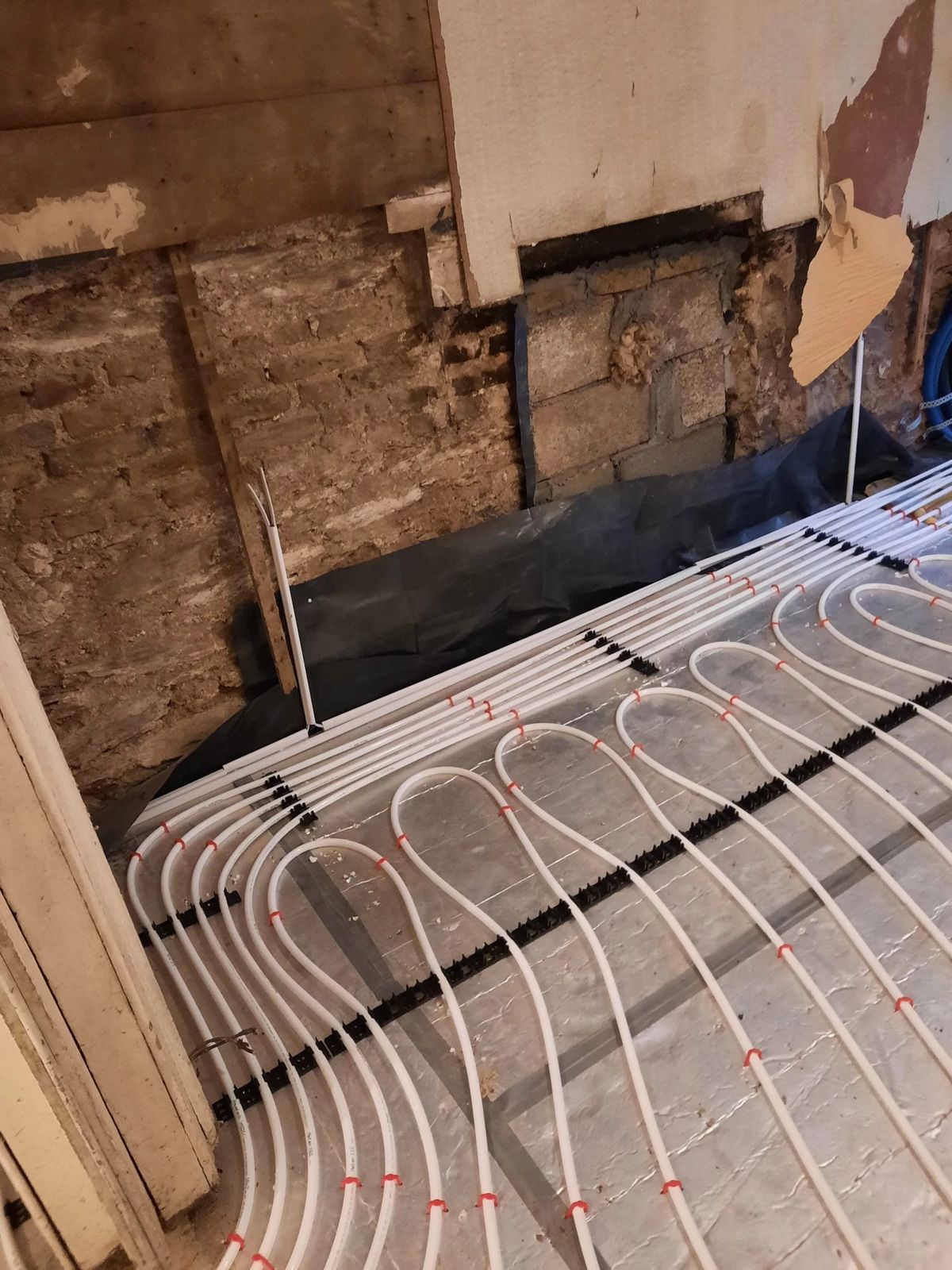
Why is an old stone house different?
You can't treat a 150-year-old farmhouse outside Kinsale the same way you'd treat a new build in Carrigaline. A lot of these older houses have solid stone walls, little or no damp-proofing and floors that were originally designed to allow moisture to escape.
If you go digging everything out and putting down concrete, insulation and underfloor heating without understanding how that building handles moisture, you could end up causing damp problems that weren't there before.
What needs checking before the floor comes up?
I'd want the floor and moisture conditions properly assessed first, ideally with someone experienced in traditional buildings.
Then we'd look at insulation, available floor depth, pipe spacing and whether the existing oil boiler, gas boiler or heat pump is suitable.
Does underfloor heating need insulation underneath?
Yes, it's crucial. Underfloor heating works brilliantly when it's designed properly, but without insulation underneath it, you're losing heat into the ground.
Can I keep the original flagstones?
If the homeowner wants to keep them, we'd need to plan around that carefully.
Is it worth taking the extra time?
I'd sooner spend more time getting the floor construction right than install a heating system that leaves someone with damp walls five years down the line.